Dentists who are working for the public system are leaving the profession in numbers and getting involved in the lucrative Aesthetic industry, leading to what’s been described as a ‘dental drought’ in one West of Ireland county”.
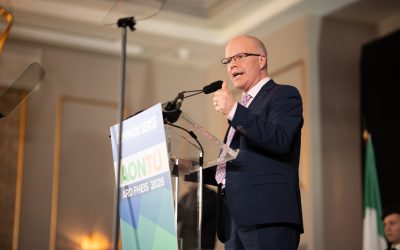
Aontú Clare Representative, June Dillon has called the state of dentistry in Clare and across Ireland as ‘scandalous’, warning that patients are being left languishing on long waiting lists while dentists are being driven out of public service by a system “stuck in 1985 when shoulder pads were in fashion.”
Speaking after extensive conversations with Clare dentists, Ms. Dillon said:
“What we are witnessing is nothing short of a dental drought in Clare. The lack of dentists outside of Ennis, and the geographical spread, makes dental care inaccessible. Outside of Ennis, Shannon has three dental practices, with one each in Ennistymon, Killaloe, Kilrush, Scariff and Sixmilebridge. Families are waiting months, sometimes years, to see a dentist. It is hardly surprising when you consider the way the State treats the profession – dentists are more or less left to fend for themselves as small private practitioners, with none of the structural supports that rural GPs enjoy. A rural GP gets both an item fee and a list fee to keep their practice afloat .A rural dentist? Nothing of the sort – just a fee per filling, if they’re lucky enough to be paid at all.”
Ms. Dillon highlighted the absurdity of a system that seems almost designed to drive practitioners out of public provision:
“Dentists tell me the medical card scheme is all but unworkable – they spend half their time drowning in paperwork, chasing payments, and sometimes the reimbursement doesn’t even cover the lab bill.Imagine making a denture and discovering you’ve worked for free. Meanwhile, the PRSI system works smoothly enough, but the public system leaves dentists ‘singing’ for their rightful pay. No wonder so many have left it behind.”
Ms. Dillon also pointed to the outdated legislation underpinning the sector.
“Dentistry in Ireland is still governed by an Act passed in 1985 – the same year Live Aid was on the telly and shoulder pads were in fashion. Dentists fund their own professional development, they’re excluded from last year’s Regulated Professions Act, and they’re expected to invest in their practices with no clarity as to what regulation may come around the corner. It’s a wonder anyone stays in the business at all.”
One dentist highlighted the use of dental therapists in the UK, where the dentist assesses the patient and trained therapists carry out routine procedures.This can be regulated for with updated legislation.
The shortage of orthodontists in Clare, she added, is particularly alarming:
“Clare’s orthodontic service has a gaping vacancy with no hope of being filled. Terms and conditions fail to be anywhere near competitive of orthodontic pay and conditions in the private sector. Training has been centralised to Dublin, the midwest left abandoned. Parents are left watching their children endure years of unnecessary waiting, while the Government washes its hands of responsibility.”
Meanwhile, university places are scarce, graduate entry routes non-existent, and a significant proportion of places in Irish dental schools are given to overseas students – many of whom return abroad after graduation.
“It beggars’ belief. Young Irish people who wish to serve their own communities are facing huge obstaclesjust to get on a course, while foreign students are given priority places thanks to lucrative deals with international governments. The result? Irish graduates pack their bags for Canada, Australia, and beyond – because our system makes it easier for them to leave than to stay.”
Dillon is calling on “the Irish government to properly fund dental training and stop reliance on non-European Economic Area (EEA) students to fund the dental colleges. The Irish Dental Association has already asked for a cap of non-EEA students of 20% this year and decreasing to 10% over the next three years. Non-EEA students pay over €45,000 per year to train in Irish dental colleges. Non-EEA students are funding Irish dental courses and then leaving the country once qualified.Approximately half of the total dental student intake is made up of students from outside the EEA”
Ms. Dillon said the consequences are being felt in households across Clare:
“The result of all this mismanagement is simple: families in Clare can’t get an appointment, let alone a dentist . There is one dental practice from Loop Head to Ennis. Children are waiting years for braces. Older people are travelling hours for basic care. And patients are left paying through the nose for private treatment while the public system collapses. Dentists love their work – they love helping people and solving problems – but too many are being driven into purely aesthetic practice because that is the only way to survive in such a broken system.”
Dentists are doing Botox treatments when they want to be fitting braces
Calling for urgent reform, Ms. Dillon concluded:
“The solutions are staring the Government in the face: make the medical card scheme viable with proper supports, provide incentives for dentists to stay in public service, update the 1985 Act, expand college places by expanding dental college facilities, open graduate-entry pathways, and restore training to the regions. One of the main solutions dentists have suggested to help people in Clare and the rest of Ireland, is to cap the number of non-EEA students and fund Irish students but lock the Irish students into working in the public and medical card system after qualification for a certain number of years to reap the benefit of their training. Instead, the State dithers while Clare patients suffer. It is time to listen to dentists on the ground. It is time to stop brushing this problem under the carpet – or soon, none of us will be able to access a dental brush at all.”