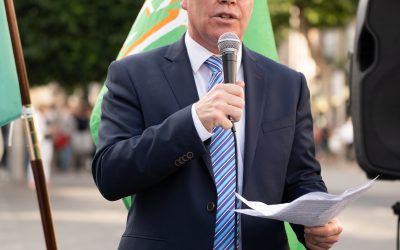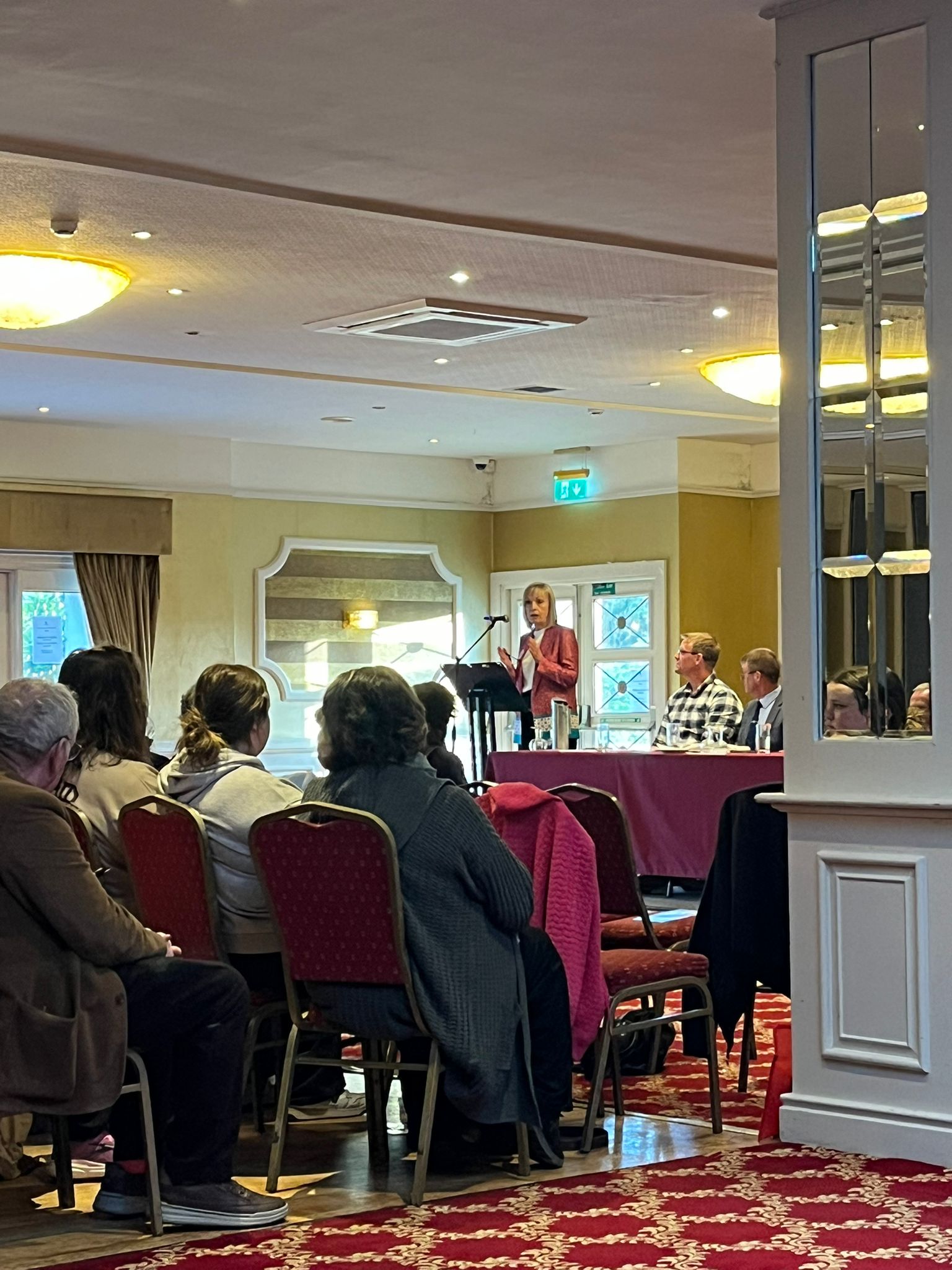
People attending a public meeting in Mitchelstown last night (20th April) heard that the town is a prime example of a rural town that has ‘been forgotten’ and is ‘stagnating through Government neglect’.
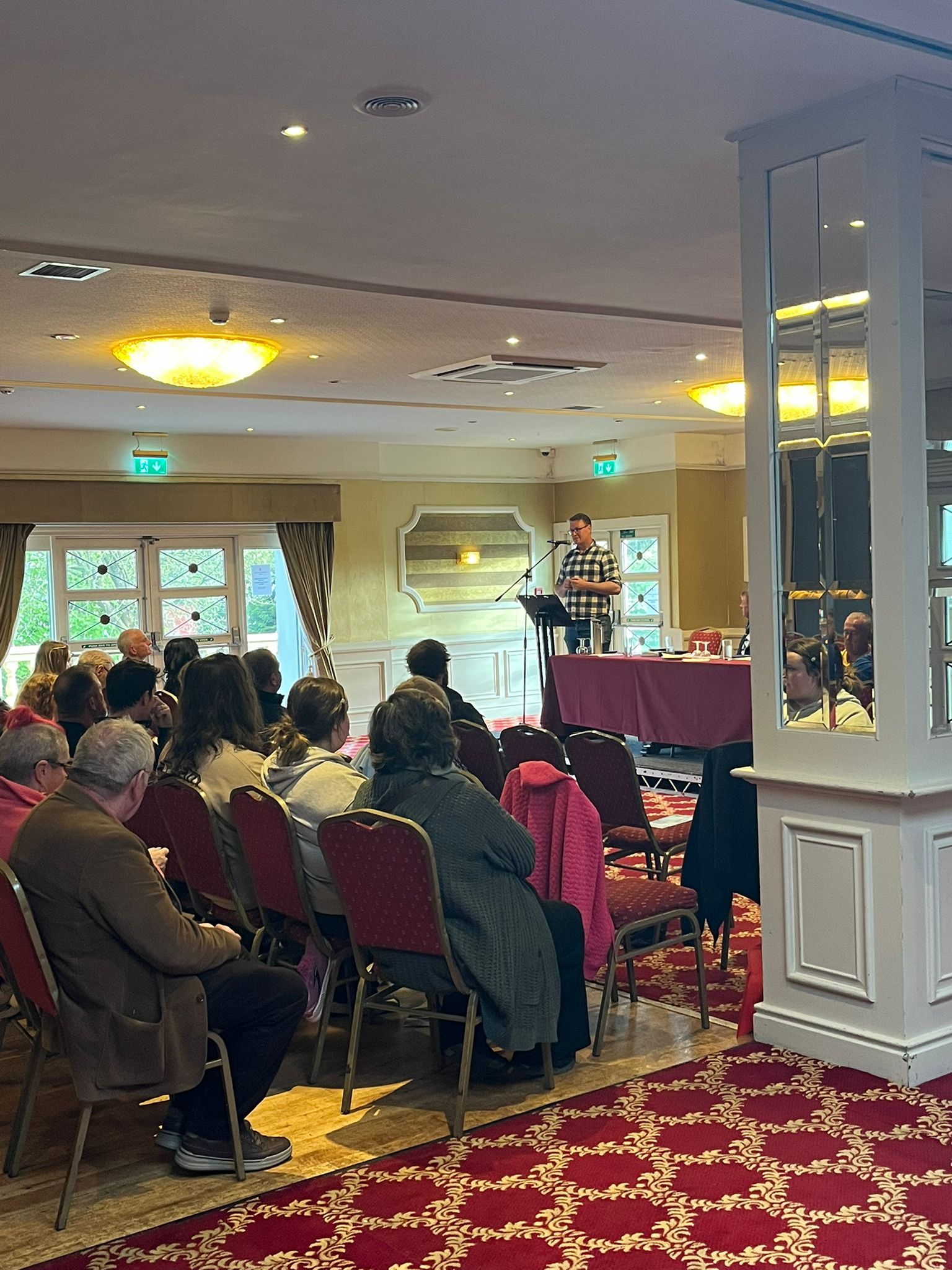
Aontú Cllr Peter O’ Donoghue, who organised the meeting, was joined by his party leader Deputy Peadar Tóibín and several colleagues and guest speakers, including those from the from the construction and vintner sectors , all of whom referenced the urgent need for supports for rural Ireland.
Addressing the large crowd Cllr O’ Donoghue said
“Rural Ireland is in a sorry state and the fault of this lies squarely at the feet of our current government.
Despite the insulting and derogatory comments by former Taoiseach Leo Varadkar just this week, rural Ireland is not a parasite, it is not a drain on the country, it is the backbone of our country.
However, it is being hollowed out and people are leaving as they have nowhere to live.
“If you go on Daft.ie there are some 10 homes for sale and one for rent in the area so how can anyone born and reared in Mitchelstown have any hope of living here. It is impossible. We know the wastewater treatment plant is a big issue and the infrastructure isn’t in place to accommodate housing. There is a €3.5 million investment into that now, but the question has to be asked is that going to actually increase housing .
I don’t actually believe it is as the wastewater treatment plant was actually operating at over capacity for the last number of years. There seems to be a glaring lack of forward planning and that is the fault of government.
I see pubs and shops as ‘essential services for communities in rural Ireland. they are the heart and soul of the area and when they disappear, the community is never the same
At a time when technology means we are all connected, we have never been so disconnected, and this is taking a huge toll on people’s mental health.
We know that Ireland has had the highest rate of loneliness in the EU with 20% of respondents to a Joint Research Centre survey, the first ever in the EU, saying they experience loneliness most or all the time, and this is very sad and concerning.
We have an aging population in Ireland and an increasing number of single people, and this can all feed into loneliness and isolation.
Rural businesses are far more than just places of ‘commerce’, they’re the social engine of rural Ireland and when the community loses its social hub there is a fracturing of that community.
We are calling for a support scheme to be developed for these shops and businesses in rural Ireland to ensure that social hubs remain within these rural communities.
People need people and they need a place to gather, and we need supports to be out in place to inject some viability into these businesses. They simply cannot be allowed to go by the wayside.
These businesses may have sustained generations, and it is shocking to see them go into decline as rural Ireland is being hollowed out by a clearly ‘urban centric’ government.
Varadkar’s inflammatory comments were not a ‘slip of the tongue’ and they spoke to the real disdain that he and his government colleagues had and have for areas outside the Pale”.
Aontú leader deputy Peadar Tóibín echoed these sentiments and cited the recent Fuel Protests as a desperate plea for help by the ordinary men and women who are working all hours just to try and keep afloat.
He said
“Ireland is becoming a city state. The population size of Dublin in proportion to the rest of the country is decidedly imbalanced in comparison with other countries in Europe. Economic vitality, investment, infrastructure and population are concentrating in the Greater Dublin Area.
Young people are relocating at startling rates from rural areas to large urban areas, mainly to Dublin. This relocation is driven by the concentration of jobs in these cities and the necessity for young professional couples to achieve two incomes to buy a house.
The average age of a person in Killarney is ten years older than that of someone living in Balbriggan. This demographic reprofiling is subverting farming and the agri-economy across rural Ireland.
Farming is not in good shape. Only 37% of Farmers in south are independently economically sustainable. That means that in only 35% of farms the income is sufficient to cover all the costs of the family.
A further 35% of farms are only economically sustainable because a family member supplements the income of the farm by working outside the farm. According to Teagasc the remaining 30% of the farms are not economically sustainable.
The average wage of a farmer is €24,000, this is €10,000 less than the average industrial wage.
This population shift is leading to a parallel migration of services. It is estimated that currently 500 Post Offices are economically unsustainable. 139 Garda Stations have been closed. We have also seen the closure of many banks, shops and pubs in rural Ireland. Schools are closing in the west leading to pressure and new builds on the east coast.
Infrastructural funding must meet the needs of today’s demand for sure, but it also needs to disrupt trends and create and anticipate future demand.
The government must decouple the strict relationship between infrastructural investment and current demand.
What is occurring across rural Ireland is a consequence of the neglect and underinvestment of the government in these regions, running down the population and capabilities of towns on the basis of centralisation, and flawed planning and spatial strategies.
The Construction Industry Federation stated that in terms of the south of Ireland, the greater Dublin region attracts 48% of all infrastructural spending such as roads, including motorways, rail and utilities.
Aontu has called for the development of two new major international cities to counteract the over-dominance of Dublin and Belfast on the social and economic development of the island,
These cities should become the default cities for new technology, infrastructural innovations and pilots. A specific Spatial Development Fund for infrastructural investment should be focused on these two cities.
The selection of these International Objective Cities is of course politically fraught. Their selection needs to be on the basis of independent competition. The spatial criteria for this competition should be decided upon by international planning experts.
Denmark had found itself in similar demographic distribution difficulties and yet it has achieved its aim of developing Aarhus, a new significant urban centre able to act as a balance to Copenhagen.
Broadband speeds in certain parts of the country are up to 36 times slower than other areas in the state which is seriously hindering economic progress in the regions. Yet the government do not seek to accelerate the Broadband delivery date and cannot guarantee that we will all be connected by 2022.
The Western Development Commission is a successful development organisation and the government should consider the rolling out of this structure to other regional and rural areas like Cork.
An island wide National Greenway and Blueway Plan should be included.
Many jobs and professional roles can now be delivered remotely by workers. This provides advantages to employers in that it can reduce accommodation overheads. It also relieves transportation congestion, reduces CO2 emissions, reduces housing pressure in cities and can breathe new life into rural communities.
Out of town shopping centres have contributed to the emptying of towns and villages. This is due in part due to free and abundant car parking. It is necessary for the government to consider imposing a commercial rate on out of town car parking spaces.
Dereliction and Vacancy is gutting many towns and villages in rural Ireland.. A vacant house tax and a stronger vacant site tax should be implemented immediately.
Retail is migrating online. This is having a negative effect on business in general in Ireland as the majority of this retail is to locations outside of Ireland. Local Enterprise Offices should be tasked with helping towns provide online retail platforms for local retail outlets.
The state needs to introduce a culture of prudent ‘Patient Investments’ in certain rural projects. Credit Unions are currently highly regulated and are prevented from participating in large areas of banking activity. We need a public banking sector.
3rd Level Education is a significant driver of enterprise development. The lack of 3rd Level Education in certain regions is one of the causes of ‘youth flight’. Encouraging 3rd Level Institutions to provide outreach campuses in regional towns would allow for young people to remain living in local areas and could facilitate the development of enterprise and industry in those same areas.