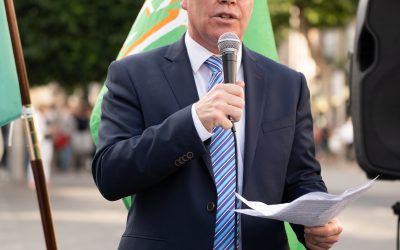
Aontú Deputy Leader and East Derry representative Gemma Brolly has raised serious concerns about the level of dysfunction within the Executive following confirmation that only 4% of the £230 million allocated for key services has been spent, despite months of public messaging about financial scarcity and widespread cuts across the system, including reductions to EA taxi drivers’ pay.
The Aontú representative said the revelation “highlights a profound disconnect between what the public is being told and what is actually happening within government departments.”
Concerns have also intensified following clarification that proposed reforms from the Department of Education and the Education Authority are not fully compliant with the law. This confirmation aligns with long‑standing worries expressed by professionals across the education sector.
As part of the statement, Ms. Brolly included personal reflections drawn from professional and parental experience:
“As a SENCO and a parent, I have always been acutely aware that a child’s Statement of Special Educational Needs is a legally binding document. That was the first red flag to me as I became aware of ‘the Enhanced Model’s and was why I had serious reservations about the legality of these proposals from the outset.”
“Even at last week’s Enhanced Model Conference event, when I heard of schools making amendments in partnership with parents, I remained concerned. Today’s confirmation from the Children’s Law Centre shows that those concerns were justified.”
Ms. Brolly also noted the implications for ongoing professional training:
“I am due to complete Day 3 of the Graduated Response training next week. How can we be expected to continue progressing through these proposals when even the Chair of the Education Committee is calling for a pause?”
The Aontú Deputy Leader concluded: “These latest developments raise profound concerns about public confidence in both governance and educational leadership. When you place financial mismanagement, legal uncertainty, and stalled reform side by side, it becomes impossible to ignore the deeper question emerging across our communities — how much further can this level of dysfunction at Stormont be allowed to go?”